Corporate Tax & Compliance
Economic Substance Reporting in the UAE: Is ESR Still Required in 2026?
Reviewed by Nithin Pathak — Founder & Managing Partner, Fastlane Management Consultancy · FTA-Registered Tax Agent · MoE-Approved Auditor · Updated for 2026
Economic substance reporting is no longer required in the UAE for financial years ending after 31 December 2022. Cabinet Decision No. 98 of 2024 removed the obligation to file an Economic Substance (ES) Notification or ES Report for those periods, cancelled the related penalties, and directed the Federal Tax Authority to refund penalties already paid. A reporting obligation now survives only for the historic ESR Period — financial years from 1 January 2019 to 31 December 2022. For every period after that, the "substance" question has moved inside the UAE Corporate Tax regime.
Key takeaways
- ESR filing is abolished for financial years ending after 31 December 2022 (Cabinet Decision No. 98 of 2024).
- The ES Notification and ES Report apply only to the ESR Period: FY 1 Jan 2019 – 31 Dec 2022.
- Penalties for post-2022 periods are cancelled; if already paid, the FTA refunds them.
- Keep ESR records for 6 years — the FTA can still review the 2019–2022 period.
- From 2023 onward, substance is governed by Corporate Tax, mainly the Qualifying Free Zone Person "adequate substance" test for the 0% rate.
Is economic substance reporting still required in the UAE in 2026?
No. For any financial year ending after 31 December 2022, businesses do not file an ES Notification or an ES Report. Cabinet Decision No. 98 of 2024 amended the original framework — Cabinet Decision No. 57 of 2020 — to limit the entire regime to fiscal years falling between 1 January 2019 and 31 December 2022. The decision was published in the Official Gazette on 16 September 2024 and took effect from 2 September 2024, with the Ministry of Finance confirming the cancellation publicly on 14 October 2024.
In practice, this means that if your company's financial year ends on or after 1 January 2023 — a normal calendar year 2023, 2024 or 2025, for example — there is simply nothing to file. The ESR portal filing, the "Relevant Activity" declaration, and the substance test no longer apply to you.
The regulation still exists on paper for 2019–2022, but for the periods most businesses are working on today, ESR reporting is done.
What did Cabinet Decision No. 98 of 2024 change?
The decision did three things that matter to almost every UAE business:
| Area | Position before | Position after CD 98/2024 |
|---|
| Who must file | Onshore and free zone licensees carrying out a Relevant Activity filed every year | Filing applies only to fiscal years ending on or before 31 Dec 2022 |
| Penalties | Fines applied for late/failed notifications, reports and substance failures | Fines for financial years ending after 31 Dec 2022 are cancelled |
| Penalties already paid | Paid and retained by the authority | The FTA must refund penalties paid for post-2022 periods |
The reason for the change is straightforward: it aligns ESR with the arrival of UAE Corporate Tax. The whole purpose of ESR was to ensure companies had genuine activity in the country rather than using it purely as a low-tax booking location. Corporate Tax now pursues that same objective through its own rules, so the standalone ESR filing became redundant.
Who still has economic substance obligations (the 2019–2022 ESR Period)?
Only entities that carried out a Relevant Activity during a financial year within 1 January 2019 to 31 December 2022 and never filed — or filed incorrectly — may still need to complete or correct those historic filings. The cut-off is set by when the financial year ends, not when it begins. These worked examples make the boundary clear:
| Financial year | Ends on | ESR filing required? |
|---|
| Calendar year 2022 | 31 Dec 2022 | Yes — full ESR compliance for that period |
| 1 Jul 2022 – 30 Jun 2023 | 30 Jun 2023 | No — ends after 31 Dec 2022 |
| Calendar years 2023, 2024, 2025 | 31 Dec (each year) | No — outside the ESR Period |
⚠️ Two things to remember for the historic period
Retention: keep all ESR supporting documents and portal access for at least 6 years after the end of the relevant reportable period — the FTA retains the right to audit whether the substance test was met during 2019–2022. Stray filings: if you mistakenly submitted an ES Notification or Report for a period after 31 December 2022, the authorities are expected to disregard it, though formal guidance is still awaited.
What did an Economic Substance Report actually require? (for legacy 2019–2022 filings)
If you are cleaning up an open 2019–2022 filing, the report followed a fixed structure. It applied only to entities — including UAE branches — that carried out one or more of the nine Relevant Activities: banking, insurance, investment fund management, lease-finance, headquarters, shipping, holding company, intellectual property, and distribution & service centre. A Licensee is any juridical person, unincorporated business or partnership registered in the UAE that earned income from a Relevant Activity.
The core reporting fields
Licence details. The commercial/trade licence or permit number, and the licensing authority that issued it (Department of Economic Development or a Free Zone Authority).
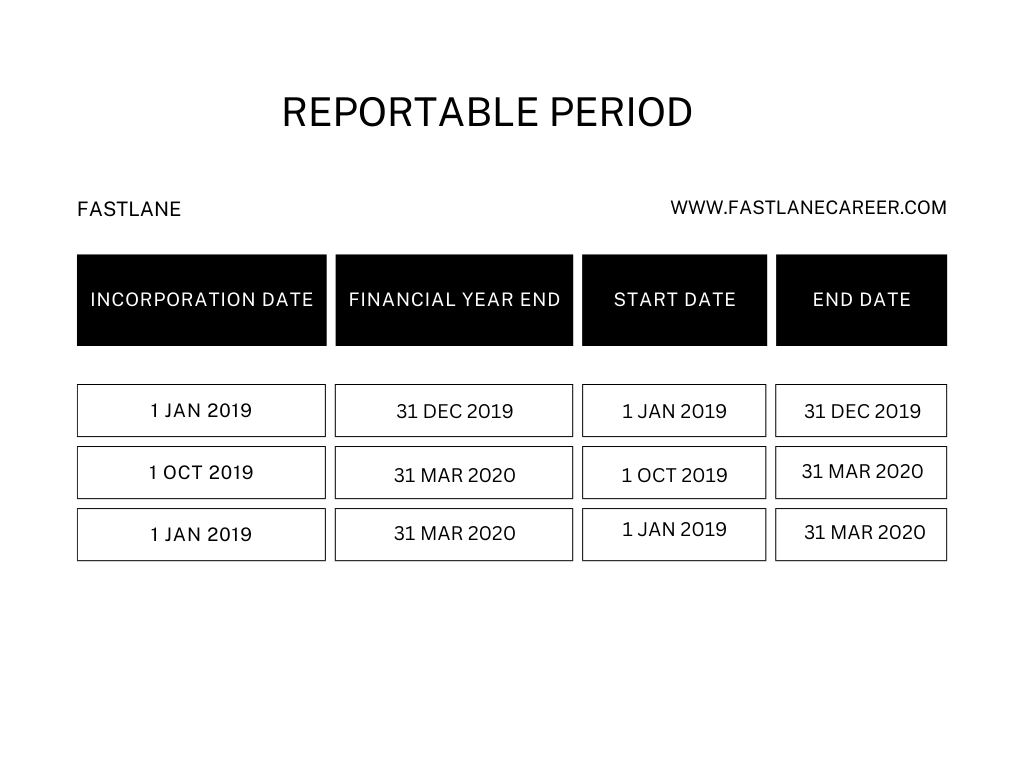
Reportable period. The accounting period beginning on or after 1 January 2019, with start and end dates matching the financial statements — a normal 12-month year, a short first period for a newly incorporated entity, or a longer transitional period.
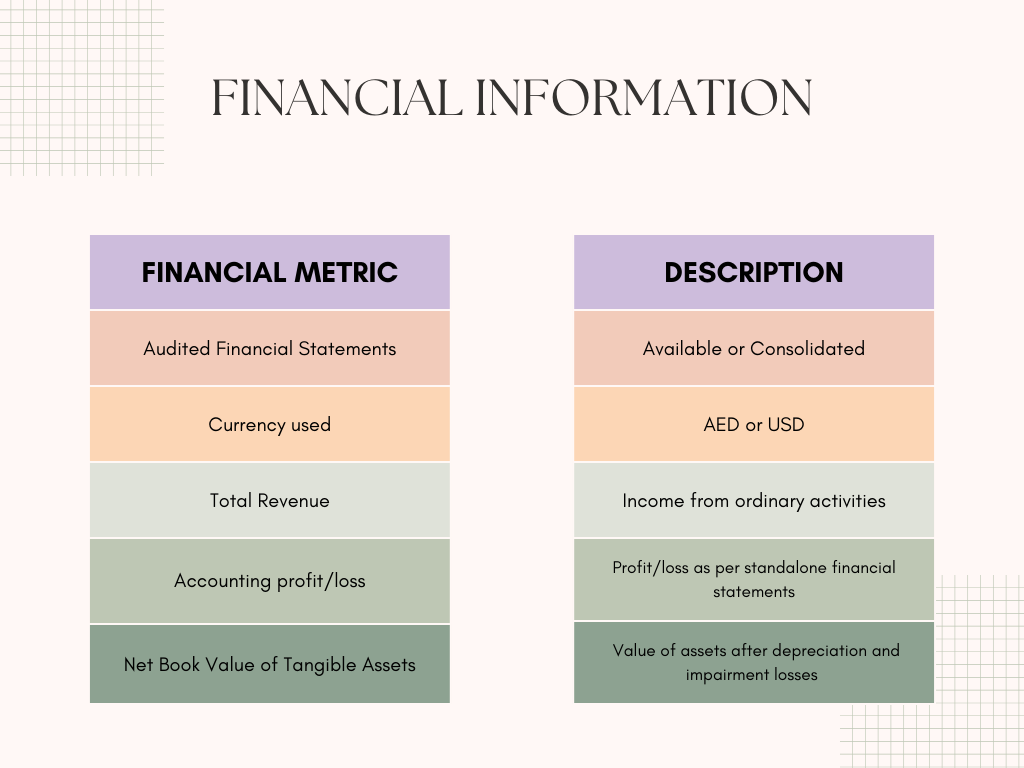
Financial information. Whether audited financial statements exist for the period; the currency (AED or USD); total revenue from the Relevant Activity; the accounting profit or loss; and the net book value of tangible assets (property, plant and equipment, inventory, receivables and cash, net of depreciation and impairment).
Changes since notification. Any answers that differed from the previously filed ES Notification for the same period had to be flagged.
I paid an ESR penalty for a period after 31 December 2022 — can I get it back?
Yes. Cabinet Decision No. 98 of 2024 cancels fines issued under the ESR for financial years ending after 31 December 2022, and any such fine already paid must be refunded by the Federal Tax Authority. If your company settled an ESR penalty relating to a post-2022 period, you are entitled to claim it back and to have any related dispute closed.
✅ What to do
Identify the exact financial year each penalty related to, confirm it ends after 31 December 2022, and lodge a refund request with the FTA. Because the refund route runs through the Ministry of Finance / FTA systems and the procedure has evolved, confirm the current submission channel before filing — our team can handle the request end to end.
Does economic substance still matter under UAE Corporate Tax?
Yes — the substance principle did not disappear, it moved into the Corporate Tax Law. The clearest example is the Qualifying Free Zone Person (QFZP). A free zone company is a taxable person under UAE Corporate Tax; the 0% rate is not automatic. It applies only to a QFZP, on qualifying income, and only where the company demonstrates adequate substance in the free zone — undertaking its core income-generating activities there, with adequate assets, an adequate number of qualified employees, and adequate operating expenditure — and confirms this in its Corporate Tax return through EmaraTax.
That is the same idea ESR was built on, now enforced through Corporate Tax rather than a separate report. If you run a free zone entity, our corporate tax compliance service in the UAE covers exactly this — from the substance evidence to the return itself. For the free zone rules specifically, see our guides on claiming 0% corporate tax as a Qualifying Free Zone Person and calculating corporate tax for a free zone person. Substance also underpins any UAE tax residency certificate application, where the FTA looks for a genuine economic base rather than a paper presence.
What should UAE businesses do now? A 2026 action checklist
The old annual ESR routine is gone. Here is what replaces it:
| # | Action | Why |
|---|
| 1 | Confirm you have no current ESR filing | Any financial year ending after 31 Dec 2022 requires nothing |
| 2 | Close out the 2019–2022 period | If you ran a Relevant Activity then and never filed, complete or correct it |
| 3 | Check for a penalty refund | Post-2022 ESR penalties are cancelled and refundable by the FTA |
| 4 | Retain ESR records for 6 years | The FTA can still audit the historic ESR Period |
| 5 | Shift focus to Corporate Tax | Register, file, and — for free zone entities — evidence QFZP substance |
The practical priority for 2026 is Corporate Tax, not ESR. If you have not yet handled it, start with corporate tax registration in the UAE and our UAE Corporate Tax guide for businesses.
Still unsure where economic substance leaves you?
We confirm whether any ESR obligation remains, recover cancelled penalties, and set up your Corporate Tax and QFZP substance position correctly.
Frequently asked questions
Is ESR still mandatory in the UAE in 2026?
No. Economic substance reporting is not required for financial years ending after 31 December 2022. Under Cabinet Decision No. 98 of 2024, the regime applies only to fiscal years within the ESR Period of 1 January 2019 to 31 December 2022.
When was ESR abolished in the UAE?
Through Cabinet Decision No. 98 of 2024, which amended Cabinet Decision No. 57 of 2020. It was published in the Official Gazette on 16 September 2024, took effect from 2 September 2024, and was announced by the Ministry of Finance on 14 October 2024. It limits ESR to financial years ending on or before 31 December 2022.
Do I still need to file ESR for 2022?
If your financial year ended on or before 31 December 2022 and your business carried out a Relevant Activity, that period is still within scope and any outstanding notification or report should be completed. Records must be retained for six years for possible FTA review.
Will my ESR penalty be refunded?
Penalties issued for financial years ending after 31 December 2022 are cancelled, and any amount already paid must be refunded by the Federal Tax Authority. You should confirm the current refund submission channel before lodging the request.
Does Corporate Tax replace ESR?
Effectively, yes. The substance principle now lives inside the Corporate Tax regime — most visibly in the Qualifying Free Zone Person "adequate substance" test that a free zone company must meet to access the 0% rate on qualifying income and declare in its Corporate Tax return.
This article is prepared and reviewed by the Corporate Tax advisory team at Fastlane Management Consultancy, an FTA-Registered Tax Agent (TRN: 104218042400003) and MoE-Approved Auditor based in Dubai. It reflects the UAE position as at 2026 and is general information, not a substitute for advice on your specific facts.