The Economic Substance Regulations (ESR) in the UAE were abolished for financial years ending after 31 December 2022, under Cabinet Decision No. 98 of 2024. In practice this means most businesses no longer file an ESR notification or report at all — but the “substance” idea did not disappear. It moved into the UAE’s corporate tax regime, where free zone companies claiming the 0% rate must still prove real activity in the country. This guide explains what changed, what you still owe for the 2019–2022 period, and how to reclaim ESR penalties you may already have paid.
Key takeaways
ESR is abolished for financial years ending after 31 December 2022 (Cabinet Decision No. 98 of 2024, in force 2 September 2024).
No ESR notification or report is due for FY2023 onward — including a 1 July 2022–30 June 2023 year, because it ends after 31 December 2022.
ESR still applies to the 1 January 2019 – 31 December 2022 window; any outstanding filings for those years must still be submitted.
Penalties for post-2022 years are cancelled, and amounts already paid (up to AED 20,000 / AED 50,000) are refunded by the FTA.
“Economic substance” now lives in corporate tax: a Qualifying Free Zone Person must still show adequate substance to keep the 0% rate.
Keep ESR records for at least six years — the FTA can still review the 2019–2022 period.
Not sure whether an old ESR filing is still hanging over your business? Our FTA-registered team will check your 2019–2022 position and your corporate tax substance in one short review.
What are the Economic Substance Regulations (ESR), and do they still apply in the UAE?
The Economic Substance Regulations (ESR) were a UAE reporting regime that required companies carrying out certain “Relevant Activities” to prove a genuine economic presence in the country. They no longer apply to financial years ending after 31 December 2022. For any current year, there is nothing to file.
ESR was introduced in April 2019 (Cabinet Resolution No. 31 of 2019), consolidated by Cabinet Decision No. 57 of 2020, and explained in Ministerial Decision No. 100 of 2020. It was the UAE’s response to the OECD’s work on base erosion and profit shifting (BEPS) and to European Union concerns about the country’s tax framework.
The regime applied to a “Licensee” — any onshore or free zone company, branch or partnership — that carried out one of nine Relevant Activities: banking, insurance, investment fund management, lease-finance, headquarters, shipping, holding company, intellectual property, and distribution & service centre business. A Licensee filed an annual notification and, if it earned income from the activity (“Relevant Income”), an annual report, and had to satisfy the Economic Substance Test by showing adequate staff, expenditure and physical presence in the UAE.
When did ESR end, and which financial years does it still cover?
ESR ended for financial years ending after 31 December 2022. Cabinet Decision No. 98 of 2024, which came into force on 2 September 2024, limited the regime to the period 1 January 2019 to 31 December 2022. What matters is your financial year-end date, not the start date.
Your financial year
ESR notification / report required?
Any year within 1 Jan 2019 – 31 Dec 2022
Yes — full ESR obligations apply
1 Jan 2023 – 31 Dec 2023
No
1 Jul 2022 – 30 Jun 2023
No — it ends after 31 Dec 2022
1 Apr 2023 – 31 Mar 2024 (and every year after)
No
The second row is the one businesses most often get wrong: a year that started in 2022 but ended in 2023 is outside ESR, because the test is the year-end date.
Do you still need to file an ESR notification or report in 2026?
For any financial year ending after 31 December 2022, no — you do not file an ESR notification or report. You only have live ESR obligations if a filing for the 2019–2022 window was missed or left incomplete. Here is how to check:
List each financial year that ended on or before 31 December 2022.
Confirm you submitted the ESR notification for each of those years.
Confirm whether you earned Relevant Income and, if so, whether you filed the ESR report and met the substance test.
If anything is missing, prepare and submit it now — the obligation for that period still stands and remains enforceable.
For every year ending after 31 December 2022, take no ESR action; put that effort into corporate tax instead.
What happened to ESR penalties, and can you claim a refund?
ESR penalties for financial years ending after 31 December 2022 have been cancelled, and any such penalty already paid is refunded by the Federal Tax Authority. Penalties still stand for breaches in the 2019–2022 period.
ESR breach
Penalty
Failure to submit the ESR notification (2019–2022)
AED 20,000
Failure to submit the ESR report or meet the Economic Substance Test (2019–2022)
AED 50,000
Any penalty for a financial year ending after 31 December 2022
Cancelled — refunded if already paid
Repeated substance-test failures carried higher penalties and could lead to licence action, so the 2019–2022 window is still worth closing out properly. If your business paid an ESR penalty for a post-2022 year, you can pursue a refund through the FTA.
What are your remaining ESR obligations for 2019–2022?
For financial years between 1 January 2019 and 31 December 2022, your ESR obligations survive: file anything outstanding, be able to demonstrate substance, and keep the supporting records. In practice, hold on to:
ESR notifications and reports you submitted (or should have submitted) for each year
Financial statements showing Relevant Income and operating expenditure for each Relevant Activity
Evidence of UAE employees and full-time-equivalents (FTEs), premises, and Core Income-Generating Activities (CIGAs)
Outsourcing agreements for any CIGAs performed in the UAE by a third party
Board and management records showing that decisions were taken in the UAE
The FTA can review the ESR period for six years after each reportable year, so a year ending 31 December 2020 can be examined until 31 December 2026, and a year ending 31 December 2022 until 31 December 2028. Keep the records for at least six years, and be ready to respond to any FTA information request for that window. Reliable accounting and bookkeeping makes producing that evidence straightforward if the FTA asks.
Where did “economic substance” go after ESR was abolished in the UAE?
The substance requirement did not vanish — it moved into the UAE corporate tax regime. A free zone company that wants the 0% corporate tax rate as a Qualifying Free Zone Person (QFZP) must still demonstrate adequate substance in the country. The question ESR used to ask is now asked inside corporate tax.
To keep the 0% rate, a QFZP must earn qualifying income, carry out its Core Income-Generating Activities in a free zone, and maintain adequate assets, qualified employees and operating expenditure there. Substance can be outsourced to a related party in a free zone, provided the outsourcing is adequately supervised. These are the corporate tax rules that replaced ESR, and they are set out on our corporate tax pillar. Companies that have not yet completed their corporate tax registration should treat that as the first step, and it is worth building substance into your plans when you first set up a company in the UAE.
Worked example. A DMCC intellectual-property holding company earned AED 3,000,000 of qualifying income in 2025. Under the old rules it filed an ESR report every year. Under corporate tax there is no ESR filing, but to keep its 0% rate it must show it actually runs the relevant activities in the free zone — say, AED 600,000 of local operating expenditure plus qualified staff — rather than merely booking royalty income. If it cannot demonstrate that substance and loses QFZP status, corporate tax at 9% would apply to income above the AED 375,000 threshold: roughly AED 236,250 on AED 2,625,000. The substance question is unchanged; only the law asking it has moved.
ESR vs corporate tax substance: what actually changed?
ESR was a standalone annual filing; corporate tax substance is a condition of the 0% free zone rate, assessed within your corporate tax return with no separate ESR form. The table below shows the shift.
ESR (repealed)
Corporate tax substance (current)
Applies to
FYs 1 Jan 2019 – 31 Dec 2022
FY2023 onward
Trigger
Relevant Activities + Relevant Income
Qualifying Free Zone Person claiming 0%
Filing
Annual notification + report
No separate return; assessed within CT filing
Test
Economic Substance Test (CIGAs, staff, premises)
Adequate substance for QFZP (CIGAs in a free zone, assets, staff, opex)
Consequence of failure
AED 20,000 / AED 50,000 (2019–2022)
Loss of the 0% rate → 9% CT on non-qualifying income
Common ESR mistakes UAE businesses still make in 2026
The biggest ESR mistake in 2026 is paying for an “annual ESR filing” that no longer exists — closely followed by ignoring the 2019–2022 obligations that do. Watch for these:
Still buying “annual ESR compliance” packages for current financial years — that obligation ended for years after 31 December 2022.
Leaving 2019–2022 notifications or reports unfiled — they remain enforceable and can still attract AED 20,000 / AED 50,000 penalties.
Deleting ESR records too early — keep them six years, because the FTA can still review that period.
Assuming abolition removes all substance requirements — a QFZP claiming 0% corporate tax must still prove substance.
Confusing ESR with UBO or AML obligations — those are separate regimes and remain fully in force.
ESR is no longer a going concern for UAE businesses: for any year ending after 31 December 2022, there is nothing new to submit. What remains is tidying up the 2019–2022 period, reclaiming any penalty refunds, and making sure a free zone entity can still prove substance under the corporate tax rules. If you are unsure whether an old ESR filing is outstanding, or whether your entity meets the QFZP substance test, a short review will settle it quickly.
Close out ESR and get your corporate tax substance right. We check your 2019–2022 filings, pursue any penalty refund, and confirm your free zone entity keeps its 0% rate.
No. ESR obligations ended for financial years ending after 31 December 2022 under Cabinet Decision No. 98 of 2024. You only act on ESR now if a 2019–2022 filing is still outstanding.
Do I need to file an ESR report for 2023, 2024 or 2025?
No. No notification or report is due for any financial year ending after 31 December 2022, including a year that runs from July 2022 to June 2023, because it ends after that date.
Can I get a refund of ESR penalties I already paid?
Yes, for financial years ending after 31 December 2022. The Federal Tax Authority cancels those penalties and refunds amounts already paid; penalties for the 2019–2022 period still stand.
I never filed my 2019–2022 ESR notification or report — what should I do now?
The obligation still applies for that period. File the outstanding notification or report as soon as possible; penalties of AED 20,000 (notification) and AED 50,000 (report) can apply to those years, so it is worth resolving.
Does abolishing ESR mean free zone companies no longer need economic substance?
No. To keep the 0% corporate tax rate as a Qualifying Free Zone Person, a company must still demonstrate adequate economic substance in the UAE — qualifying activities carried out in a free zone, with adequate assets, staff and expenditure.
Which law abolished ESR in the UAE?
Cabinet Decision No. 98 of 2024, which amended Cabinet Decision No. 57 of 2020 and took effect on 2 September 2024. The Ministry of Finance confirmed the change in October 2024.
UAE ESR Abolished: What It Means Now | Fastlane
Jun 13
Navigating Economic Substance Regulations: A Practical Guide Introduction Complying with Economic Substance Regulations (ESR) can be challenging. This guide simplifies the process by breaking it down into essential questions and practical examples, helping you ensure your business meets all requirements efficiently. Let’s dive into understanding Relevant Activities and how to report them accurately.
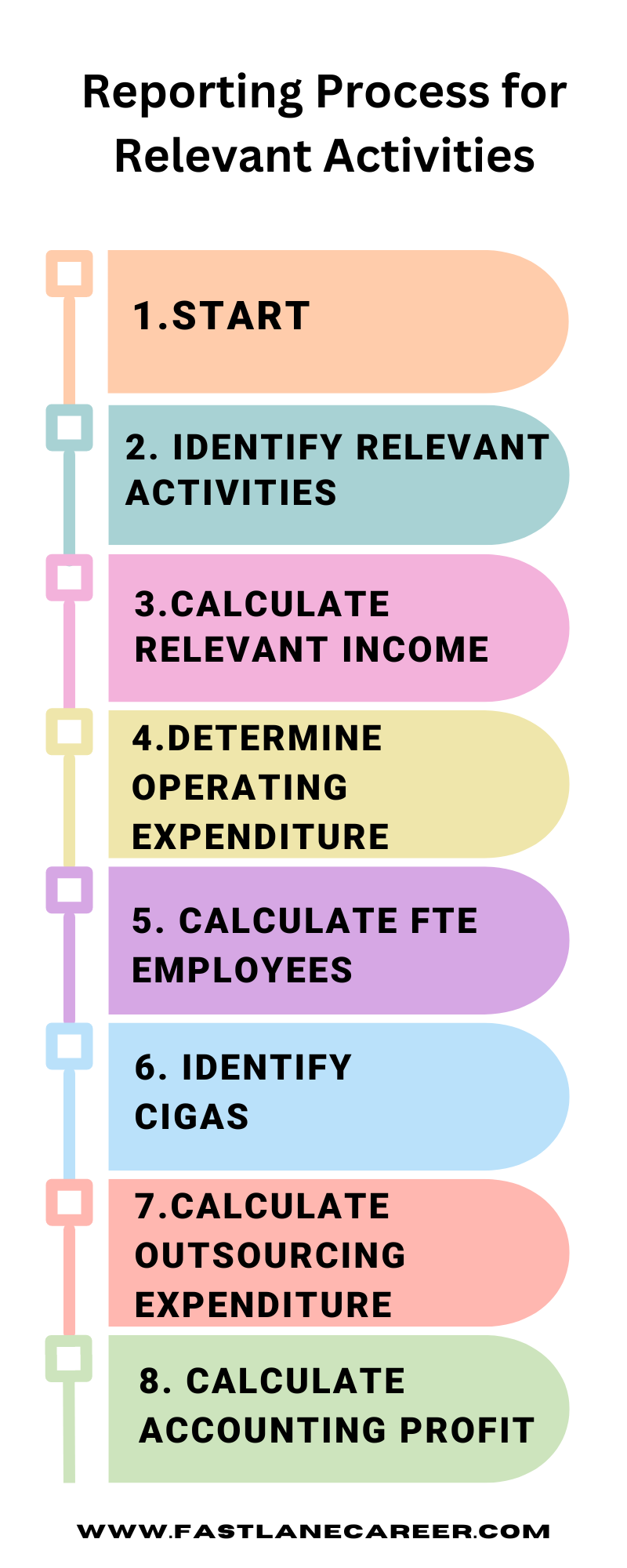
Key Questions for All Relevant Activities 1. Relevant Income from the Relevant Activity for the Reportable Period What?
Relevant Income includes all gross income earned from a Relevant Activity as recorded in the company’s books under applicable accounting standards. This includes revenues from sales, services, royalties, interest, premiums, dividends, and any other income from the Relevant Activity.
Example: Tech Innovators Ltd. earned $500,000 from software sales and $200,000 in royalties from its IP assets during the reportable period. The total Relevant Income is $700,000.
2. Operating Expenditure Incurred in Relation to the Relevant Activity for the Reportable Period
What?
Operating expenditure is the total amount spent to perform the Relevant Activity. This includes payroll, sales commissions, administrative expenses, transportation, travel costs, amortization, depreciation, and rent.
Example:
Tech Innovators Ltd. incurred $150,000 in payroll, $50,000 in travel costs, and $100,000 in administrative expenses, totaling $300,000 in operating expenditure.
3. Average Number of Full-Time Equivalent (FTE) Employees in the UAE
What?
FTE refers to the average number of full-time employees engaged in the Relevant Activity in the UAE, based on a 40-hour workweek.
Example:
Tech Innovators Ltd. had 2 full-time employees working the entire year (2 FTE), and 2 part-time employees working 20 hours a week for the entire year (1 FTE), totaling 3 FTEs.
4. Core Income-Generating Activities (CIGAs) Performed in the UAE
What?
CIGAs are key activities that generate income and must be performed in the UAE.
Example:
Tech Innovators Ltd. conducts research and development (R&D) and software development, both of which are CIGAs.
5. Expenditure Incurred on Outsourcing Providers in the UAE
What?
This is the total amount spent on outsourcing any CIGAs to third-party providers.
Example:
Tech Innovators Ltd. spent $50,000 on outsourcing part of its R&D to a local research firm.
6. Accounting Profit (Loss) Attributable to the Relevant Activity
What?
This is the Relevant Income minus all costs associated with the Relevant Activity.
Example:
Tech Innovators Ltd. had a Relevant Income of $700,000 and operating expenses of $300,000, resulting in an accounting profit of $400,000.
Reporting Process for Relevant Activities
How Fast Lane Can Help?
Fast Lane specializes in helping businesses navigate the complexities of Economic Substance Regulations. Here's how we can assist you:
Tailored Guidance: We offer personalized advice to identify and classify your Relevant Activities accurately.
Compliance Solutions: Fast Lane ensures that all your reporting is timely and correct, minimizing the risk of non-compliance.
Ongoing Support: With regular reviews and updates on regulatory changes, we keep your business compliant year-round.
Outsourcing Assistance: We can manage your Relevant Activities through our outsourcing services, streamlining your operations and ensuring adherence to ESR.
By partnering with Fast Lane, you can focus on growing your business while we handle your compliance needs.
Conclusion
Understanding and complying with ESR is essential for businesses operating in jurisdictions with these regulations. By breaking down the process into manageable steps and using practical examples, you can ensure your company meets all requirements efficiently. Remember to regularly review your activities, use the provided guides, and report accurately to stay compliant. With Fast Lane's expert support, navigating ESR becomes a seamless process.
Created with
Login or sign up to start learningLogin to start learning